
We often race one another clearing the table after dinner. It’s not an overt race with running shoes, numbers strapped to our chests and the crack of a starting pistol, but a low-key, passive-aggressive run-walk type race.
I move toward the sink with a dish holding the scattered remains of a lone chicken enchilada. He pulls back his chair; I quicken my pace. Just as I am about to dump the enchilada remains into the disposal, he reaches from behind, catches the remains midair in a small plastic box and seals the lid.
“You weren’t going to throw that away, were you?” he asks.
“Of course not. I was just holding it over a running garbage disposal to toy with it, sadist that I am.”
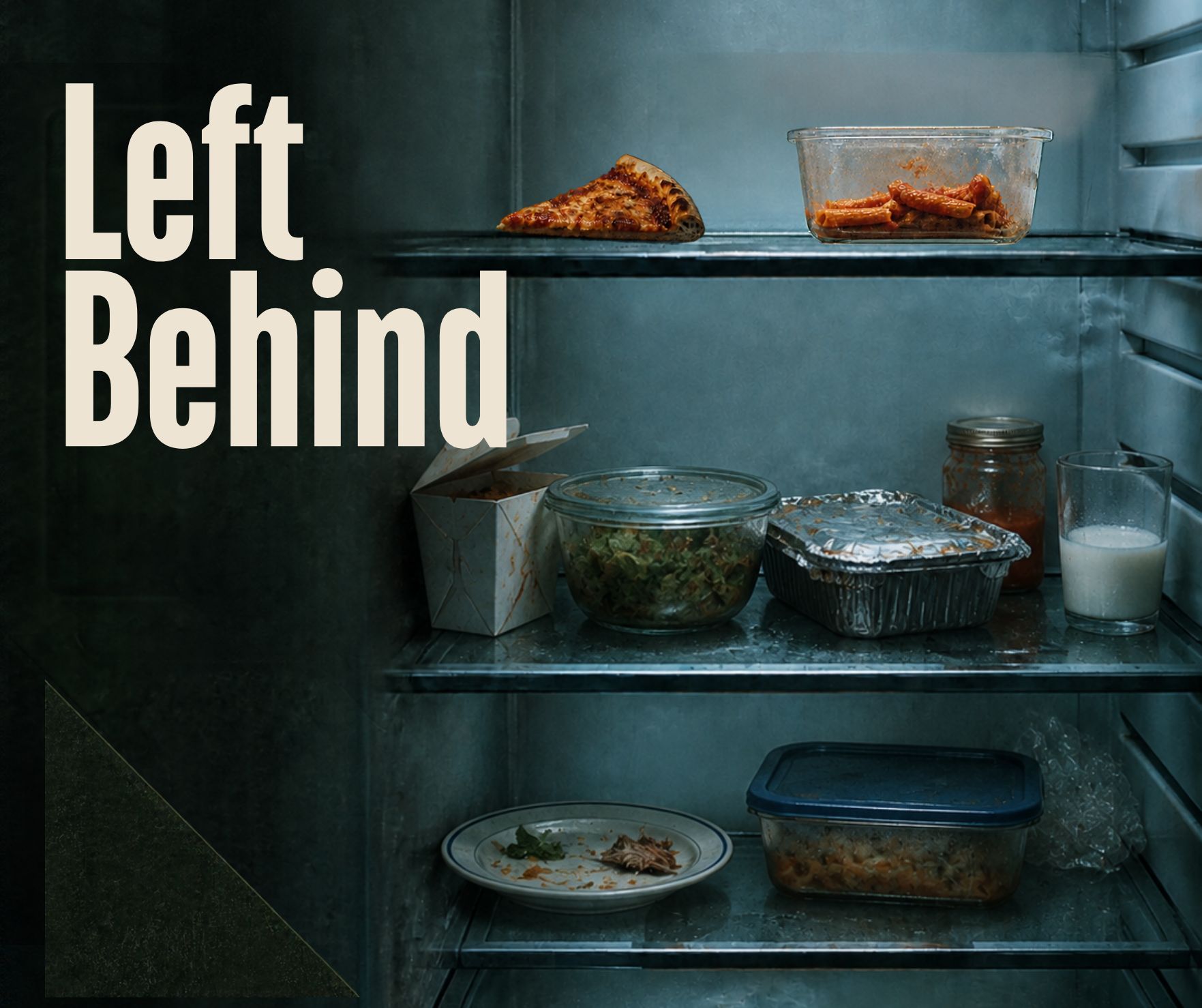
He delivers the enchilada remains to the refrigerator, where they are welcomed by other small containers holding 15 kernels of corn, three broccoli florets, 2 tablespoons of brown rice, five wilted spinach leaves and half of a dried and aging lemon smothered in plastic wrap.
You’d think the man grew up food deprived. He did not. Their family refrigerator absolutely bulged. With leftovers. It was said no one had reached the back of that refrigerator in decades, where there were rumored to be leftovers dating back to when Neil Armstrong and Buzz Aldrin walked on the moon.
All that to say, the Tupperware doesn’t fall far from the tree.
At our house, no food dies before its time. Some never die at all; they simply fossilize and petrify. Many of the small containers ease into a slow rotation with other abandoned leftovers.
As the chicken enchilada takes center stage, aging spinach moves to the side, pushing browning celery sticks in a baggie to the back, leaving a dish holding something growing blue fur sandwiched between an expired carton of half-and-half and an aging jar of kalamata olives. Checkmate.
The husband will eat anything set before him and never complain, even if he doesn’t like it. He would have made a great pioneer heading west on a wagon train, living on dried meat, day after day and week after week.
Because the man does not believe food is capable of going bad, there are some questions I never ask him, such as: Does this smell rotten to you? Do you think that white fuzz is normal? Any guess how old this salmon is?
Last week, he brought home a slice of pizza from our daughter’s house because he thought she was going to throw it out. Seven days and counting. Four more days and it will be genuine leather.